Ronnie Scott's Jazz Club isn't just a venue — it's a ritual. Founded in 1959 by Ronnie Scott himself, it has that rare quality of feeling both historic and completely alive. The room is deliberately intimate: tables packed close, sightlines tight, the stage almost within reach.
There are really two experiences. The early show is polished — international names, standards bending, solos stretching out far past expectation. The late show is looser, more London, more likely to surprise. If you want to understand London's music culture properly, this is one of the few places that still feels essential rather than ceremonial.
It's not cheap, and it's not trying to be. But if you want to understand London's music culture properly, this is one of the few places that still feels essential rather than a destination.
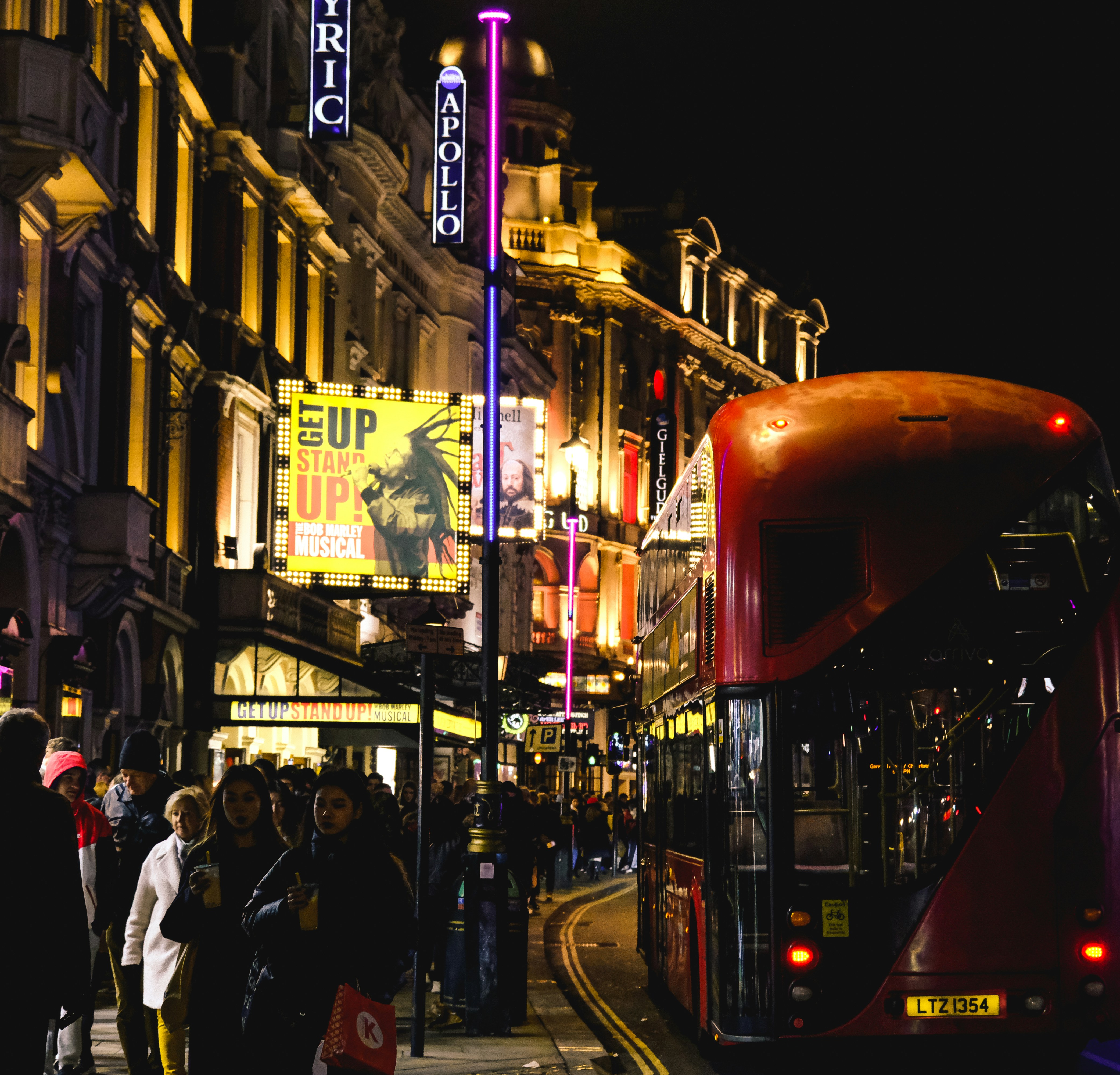
West End is London at full volume — marquees blazing, queues forming before doors open, an entire district built around the idea that stories should be experienced live. It's named through its biggest exports — long-running musicals, packed houses, polished productions — but that's only the surface.
Look closer and the rhythm changes. Between the headline shows, there's a quieter ecosystem: smaller theatres, short runs, riskier writing, and actors testing material that hasn't yet settled into something predictable. This is where the West End feels most alive.
Go for the big names if you must. But if you want to understand the West End properly, follow the smaller listings, take a chance on something unfamiliar, and treat it less like a checklist — and more like a living, shifting scene.
Behind an unassuming door in Chelsea, 606 Club is where London's jazz scene refined itself properly. Intimate, unfussy, and fiercely music-first, it's the kind of place where the musicians are world-class, the audience knows why they're there, and the night unfolds without any need for spectacle.
The food is decent, the atmosphere is genuinely warm, and the music is always worth paying attention to. It's not a tourist stop — it's a working jazz club that happens to be one of the best in Europe. Book ahead, arrive early, and let the evening take its time.
Down a set of stairs in Covent Garden, Top Secret Comedy Club delivers stand-up the way it should be — tight rooms, sharp sets, and an audience that's fully in on the moment. Names drop in unannounced, new acts test their nerve, and the whole thing feels unpredictable in the best possible way.
It runs multiple shows a night, so you can catch something early and still make dinner afterwards. Tickets are affordable, the atmosphere is electric, and it's one of the few comedy spots in London that manages to feel both local and genuinely exciting every time.